
It was the best of times, it was the worst of times, it was the age of wisdom, it was the age of foolishness, it was the epoch of belief, it was the epoch of incredulity, it was the season of light, it was the season of darkness, it was the spring of hope, it was the winter of despair.”
Charles Dickens
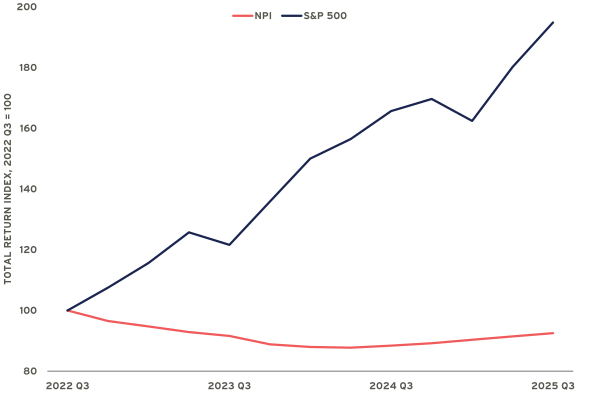
Dickens is likely the first and almost certainly the most famous commentator to employ the K-shape analogy to describe the world as he saw it—the best of times and the worst of times. While it may be difficult to declare any period as the best or worst, the past couple of years have often felt that way for property investors, particularly while the Federal Reserve raised interest rates to combat inflation in 2022 and 2023. Since the middle of 2022, the stock market (S&P500) has nearly doubled in value while the total return index for property (NPI) is down nearly 10% (Figure 1).
Figure 1
Total Return: NCREIF Property Index (NPI) vs S&P500
Source: NCREIF
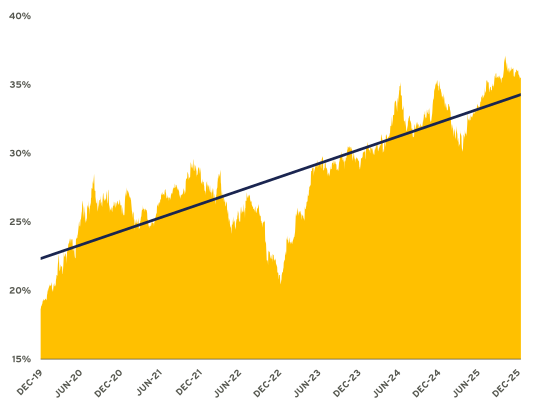
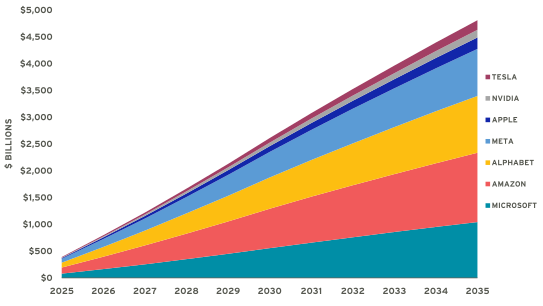
The sustained upward movement in stock prices in recent years is, of course, driven almost entirely by the performance of a small set of companies centered around artificial intelligence (AI), the advanced computer chips that enable it and the data centers that house them, the so-called Magnificent Seven companies and their related adjacencies. Today, these seven companies represent more than one-third of the entire S&P500 Index (Figure 2), effectively making nearly all investors today long AI and all that goes with it, with no real end in sight as these seven companies collectively plan to invest approximately $5 trillion into AI, chips and data centers over the next decade (Figure 3).
Figure 2
Magnificent Seven Stocks Share of S&P500 Index
Source: FactSet
Figure 3
Projected Cumulative Magnificent Seven Cap Ex Investment
Source: Individual company quarterly reports and earnings calls.
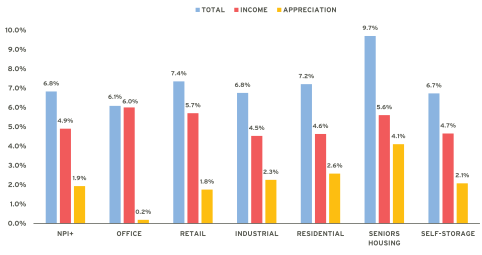
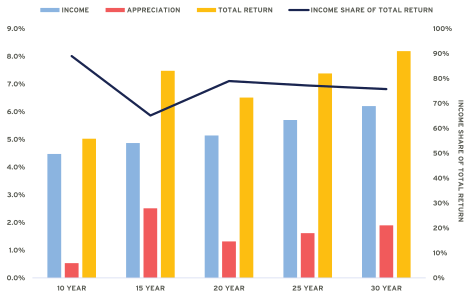
As trees continued to grow to the sky for growth and value equities, the outlook for commercial property investors, in contrast, appeared quite modest, particularly following a period of widespread valuation declines. Today, the expected unleveraged return for commercial property over the near-term is approximately 7%, with most return coming from income, not outsized appreciation.
Other observers, such as J.P. Morgan, are not real estate centric, and over the long-run they expect relatively strong performance from property with current 10- to 15-year total return expectations for U.S. core real estate (leveraged) of 8.2%, outpacing fixed income and large cap stocks expectations of 4.8% and 6.7%, respectively.
In the latest “investor-intentions” survey, most institutional investors report being under-allocated to real estate, and expect their targets to increase or stay the same. When asked why, these same investors gave the same answer as every year since the survey began: diversification —not expectations of outsized future returns.
Figure 4
Consensus Expected Return by Property Sector (2026-2029)
Source: PREA Consensus Survey, 2025 Q4
Figure 5
NPI Returns and Income Share of Total Return
Source: NCREIF, 2025 Q3
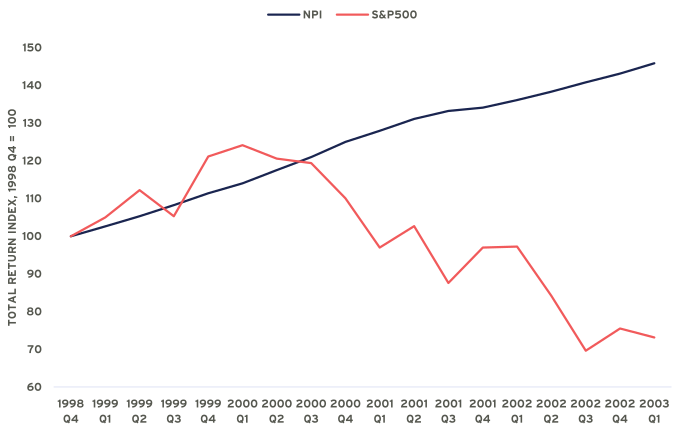
Our title, ‘Back to the Future (Again),’ was deliberate: it has been a while, but we’ve been here before. In the late 1990s, markets were equally abuzz by surging technology stocks, the dawn of the modern internet, and the sweeping optimism that came with it. Equities outperformed real estate, while the real estate story then—much like today—centered on solid, income-driven returns. Indeed, the average property yield (cap rate) in 1999 was an impressive 7.5%! In this earlier period, property performed as expected, posting steady moderate return, largely from income. High flying equities, by contrast, performed quite differently, tumbling first from the so-called ‘tech crash’ and then again in the aftermath of September 11th.
Figure 6
Total Return During the Tech Crash Period
Source: NCREIF
The Current Property Investment Underwriting Vibe
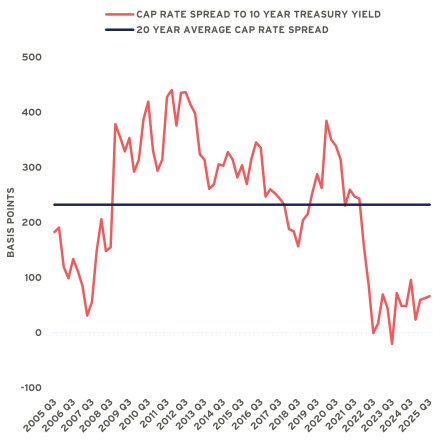
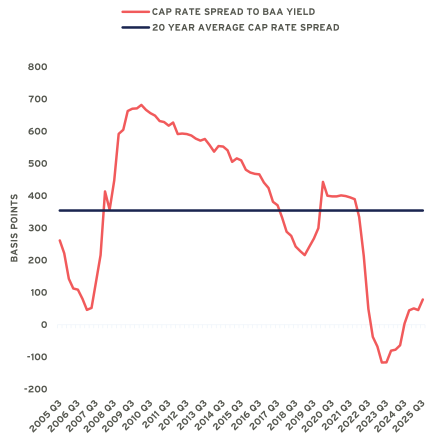
Notwithstanding everything above, we acknowledge that property investing today feels challenging. Property values have clearly adjusted with the capital value component of the NCREIF Property Index (NPI) down roughly 20% since the Fed began raising interest rates in the spring of 2022, though values have been flat over the past year. Property yields still seem low relative to Treasury yields and corporate bonds. For an investor, this does not feel good.
Figure 7
Average NPI+ Property Yield Spread to 10 Year Treasury Yield
Source: NCREIF, 2025 Q3
Figure 8
Average Property Yield Spread to Baa Bond Yield
Source: NCREIF, 2025 Q3
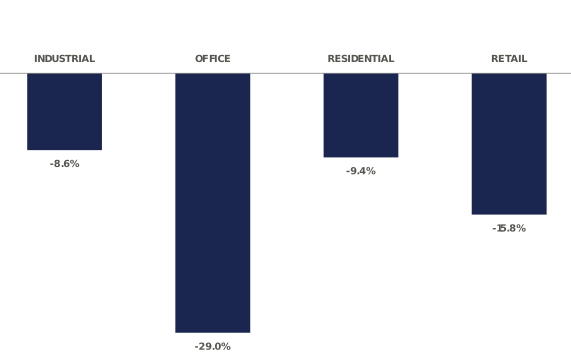
At the same time, while property values were declining in recent years, the outsized inflation of the pandemic period led to meaningful increases in property replacement costs. Today, we see most of our properties valued well inside of those replacement costs. As an investor, this feels good.
Figure 9
Current Value Relative to Estimated Replacement Cost
Source: AEW Research, 2025 Q3
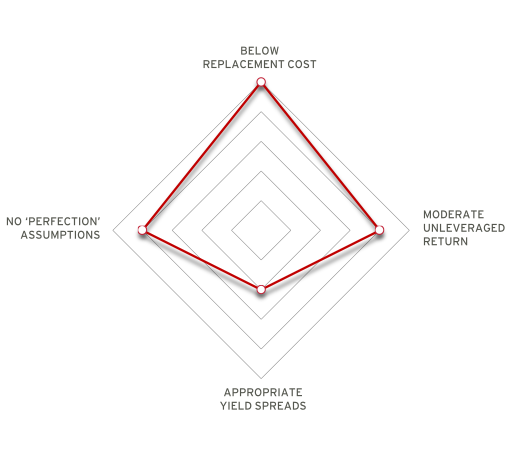
Replacement cost and current yield, while important, are not the entire story. Investors also need to consider the returns they are underwriting and the assumptions to achieve them. As discussed above, expected returns for property are moderate but still quite competitive with expected returns for competing asset classes. This feels good as an investor.
More significantly, the underwriting assumptions around future rent growth and stabilized occupancy needed to support these returns are also quite modest—and as an investor, this feels particularly good.
Figure 10
The Dimensions of Property Investment Underwriting Today
Source: AEW Research
Final Note - How?
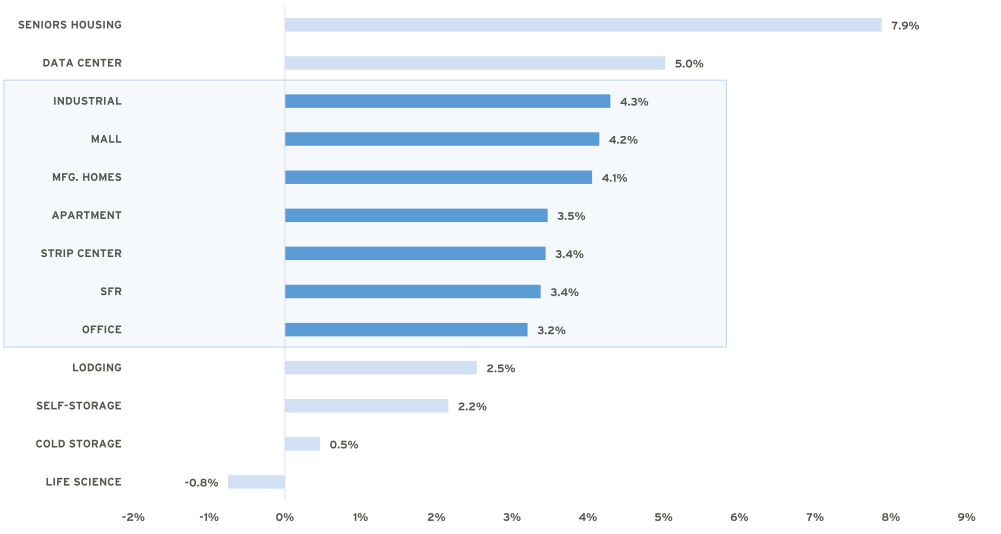
Outside of property sectors with well understood outsized demand narratives such as seniors housing or data centers, there is currently little differentiation in the outlook for property NOI growth across most sectors. For most investors, outperformance will come not from large property sector bets, but rather by asset selection and asset/property management.
Keeping with our ‘Back to the Future (Again)’ theme, we believe the next few years will be a period that rewards fundamental property investment skills: pick the best property in the best location, maintain occupancy, control expenses, and be thoughtful about additional capital invested. Investment skill is, of course, important in all time periods, but for much of the period following the Global Financial Crisis (GFC), value creation simply from ever compressing interest rates and property yields often overshadowed the value creation through traditional real estate investment and asset management. In a world where yield compression is far less likely, we believe that dynamic is about to shift —and investors who can execute on fundamentals will once again have a meaningful advantage.
Figure 11
Expected Average Annual NOI Growth by Property Sector
Source: AEW Research, 2025 Q3
For more information, please contact:
MICHAEL ACTON, CFA®
Managing Director, Head of Research & Strategy, North America
michael.acton@aew.com
+1.617.261.9577
JAY STRUZZIERY, CFA®
Head of Investor Relations
jay.struzziery@aew.com
+1.617.261.9326
This material is intended for information purposes only and does not constitute investment advice or a recommendation. The information and opinions contained in the material have been compiled or arrived at based upon information obtained from sources believed to be reliable, but we do not guarantee its accuracy, completeness or fairness. Opinions expressed reflect prevailing market conditions and are subject to change. Neither this material, nor any of its contents, may be used for any purpose without the consent and knowledge of AEW. There is no assurance that any prediction, projection or forecast will be realized.