
The essential housing sector remained relatively resilient in the second quarter of 2026. The data continues to show that all segments of the apartment market remain under pressure, though essential housing continues to outperform higher-rent product on both occupancy and rent growth. The balance of new development remains heavily concentrated in higher-rent product, shaping near-term performance and medium-term risk across the rental residential market.
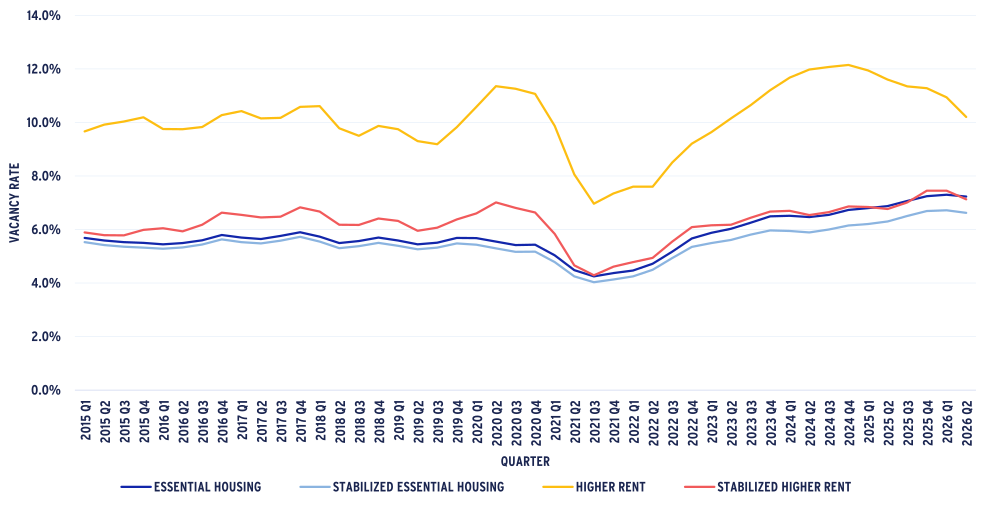
Essential housing vacancy remained elevated, though it edged down modestly during the quarter as demand improved relative to new supply. As of 2026 Q2, overall essential housing vacancy was 7.2%, up 35 basis points year-over-year but down 7 basis points from 2026 Q1. Stabilized essential housing vacancy was 6.6%, up 32 basis points versus 2025 Q2 while declining 9 basis points quarter-over-quarter. Effective rents in the segment averaged $1,498 per unit and grew 0.7% year-over-year, underscoring that pricing power remains subdued despite essential housing continuing to outperform higher-rent product on rent growth.
FIGURE 1: APARTMENT VACANCY RATE
Source: CoStar, 2026 Q2
Across the broader apartment market, higher-rent fundamentals also remained soft, though recent leasing trends point to a more meaningful demand recovery. Overall higher-rent vacancy was 10.2% in 2026 Q2, improving 139 basis points from one year earlier and 73 basis points from 2026 Q1. However, stabilized higher-rent vacancy rose to 7.1%, up 36 basis points year-over-year, despite improving 32 basis points quarter-over-quarter. Effective rents averaged approximately $2,118 per unit and declined 0.3% year-over-year, reflecting continued use of concessions and competitive lease-up conditions in recently delivered units.
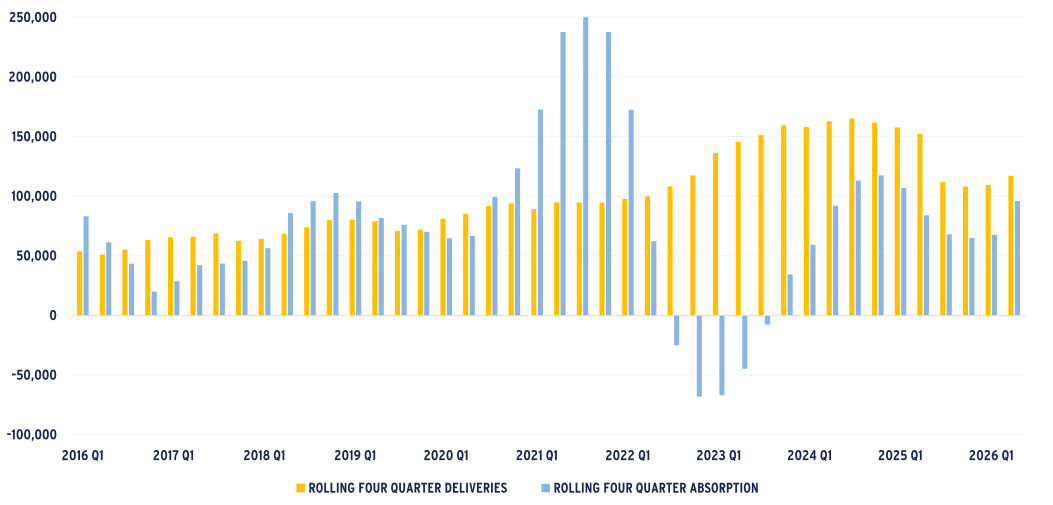
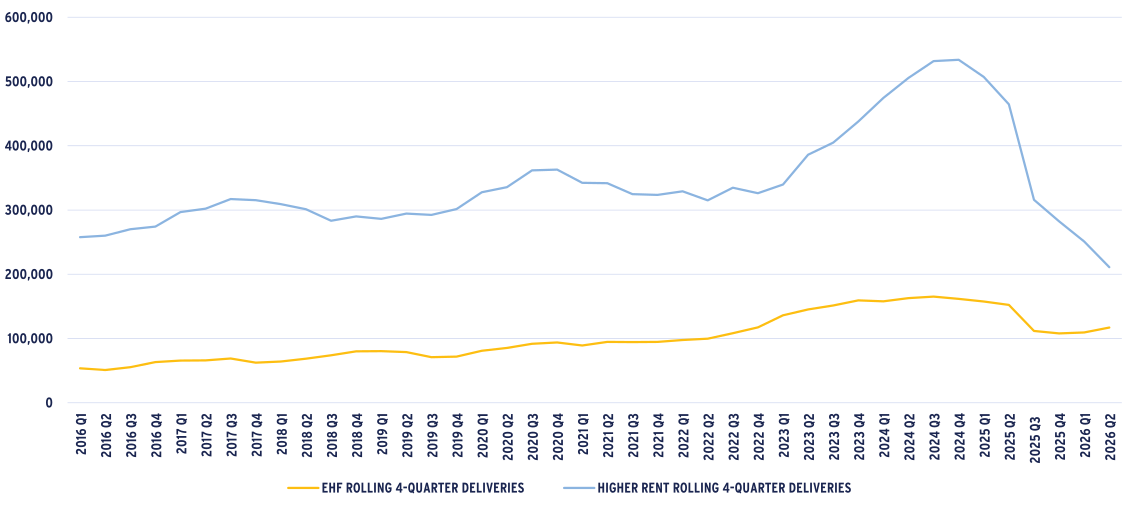
Supply dynamics remain a key driver of current fundamentals, with new deliveries continuing to skew toward higher-rent properties. During 2026 Q2, essential housing deliveries totaled approximately 45,900 units, compared with roughly 71,900 units in the higher-rent segment, or about 1.6x as many units delivered at the upper end of the market. On a trailing four-quarter basis, higher-rent deliveries totaled approximately 211,100 units versus roughly 117,100 units in essential housing, a ratio of approximately 1.8x. This remains notable given that essential housing still comprises more than two-thirds of total apartment inventory, compared with only one-third for higher-rent units.
FIGURE 2: SUPPLY & DEMAND OF ESSENTIAL HOUSING
Source: CoStar, 2026 Q2
The forward pipeline also remains tilted toward newer, higher-rent product. As of 2026 Q2, approximately 370,200 higher-rent units were under construction nationally, compared with about 203,400 units in the essential housing segment, implying a pipeline roughly 1.8x larger for higher-rent properties. In our view, this continues to support the broader thesis that the bulk of near-term supply risk remains concentrated in newer, more expensive units, even as recent absorption trends have improved.
Demand trends further illustrate the changing divergence between segments. Essential housing absorption totaled approximately 53,200 units during 2026 Q2, exceeding quarterly deliveries by about 7,300 units. On a rolling four-quarter basis, essential housing absorbed roughly 95,900 units versus 117,100 units delivered, a shortfall of approximately 21,200 units. By contrast, higher-rent absorption totaled approximately 111,200 units in the quarter, exceeding deliveries by about 39,200 units; over the trailing four quarters, higher-rent absorption reached roughly 365,600 units, well ahead of the 211,100 units delivered over the same period. This suggests that demand is now catching up to the elevated volume of recently delivered higher-rent units, even as elevated vacancy and negative rent growth continue to reflect the lagged impact of the prior supply wave. While essential housing absorption has improved, vacancy and rent growth outcomes continue to compare favorably with higher-rent properties despite still-subdued pricing power.
FIGURE 3: NET NEW APARTMENT DELIVERIES
Source: CoStar, 2026 Q2
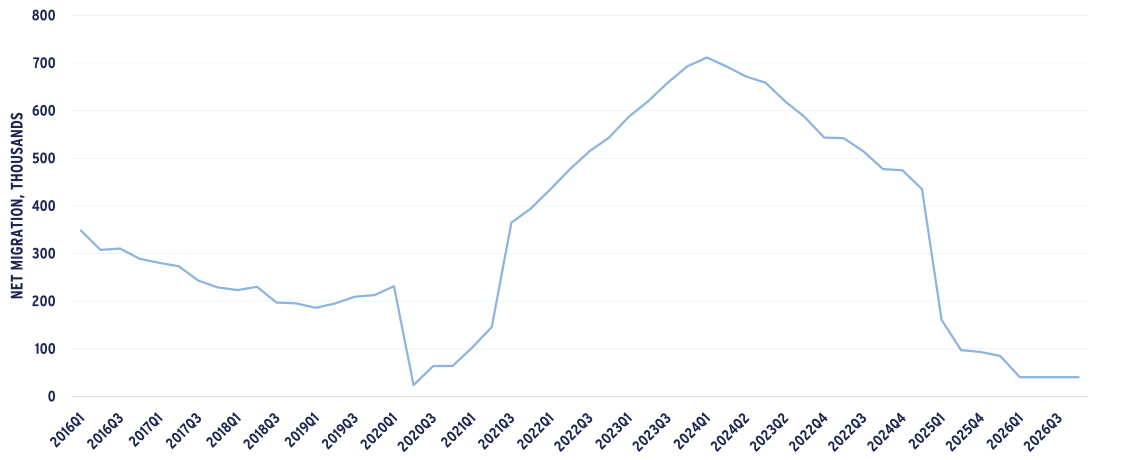
FIGURE 4: UNITED STATES NET MIGRATION - 2016 TO 2026
Source: Oxford Economics, 2026 Q2
Falling immigration remains a meaningful component of the demand story for essential housing. Annual immigration has declined 83% from its 2023 Q4 peak, creating a meaningful headwind for renter household formation. Although migration fell similarly sharply in 2020 at the onset of the pandemic, the United States is unlikely to see the same kind of rebound later this decade. Pre-COVID migration trends suggest that, even if policy conditions were to shift materially, immigration should not be expected to return to the elevated levels observed in 2022 and 2023.
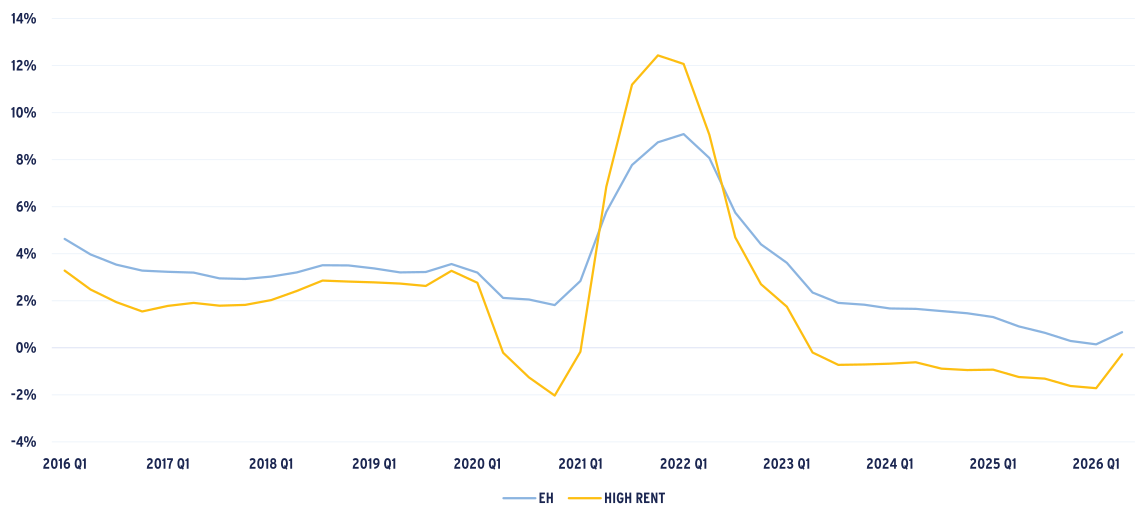
With demand still constrained by the lingering impact of prior supply additions and a softer migration backdrop, the recent rise in essential housing vacancy has continued to weigh on rent growth. Effective rent growth in the segment was just 0.7% year-over-year in 2026 Q2, down meaningfully from the higher rent growth rates observed earlier in the cycle. While essential housing rents remain nominally positive on a year-over-year basis, the current pace of growth is consistent with subdued occupancy conditions and limited pricing power.
At the same time, higher-rent effective rent growth was -0.3% year-over-year in 2026 Q2, remaining in negative territory despite stronger recent absorption. That combination of elevated vacancy, negative effective rent growth, and a still-heavy construction pipeline continues to reinforce the view that supply-related pressure is greatest at the upper end of the apartment market.
FIGURE 5: YEAR-OVER-YEAR GROWTH IN AVERAGE EFFECTIVE RENT
Source: CoStar, 2026 Q2
In aggregate, second quarter 2026 data suggests that apartment fundamentals remain in the late stages of a supply-driven correction, though recent demand data improved during the quarter. Essential housing vacancy stayed elevated and rent growth remained subdued, but quarterly absorption exceeded deliveries and the sector continued to outperform higher-rent product across key operating metrics, including vacancy and rent growth. New development remains disproportionately concentrated in higher-rent communities despite essential housing representing the majority of apartment inventory. As a result, although near-term performance is likely to remain subdued, the essential housing segment appears positioned to benefit disproportionately as the current supply wave is absorbed and demand conditions gradually normalize.
For more information, please contact:
MICHAEL ACTON, CFA®
Managing Director, Head of Research & Strategy, North America
michael.acton@aew.com
+1.617.261.9577
JAY STRUZZIERY, CFA®
Head of Investor Relations
jay.struzziery@aew.com
+1.617.261.9326
This material is intended for information purposes only and does not constitute investment advice or a recommendation. The information and opinions contained in the material have been compiled or arrived at based upon information obtained from sources believed to be reliable, but we do not guarantee its accuracy, completeness or fairness. Opinions expressed reflect prevailing market conditions and are subject to change. Neither this material, nor any of its contents, may be used for any purpose without the consent and knowledge of AEW. There is no assurance that any prediction, projection or forecast will be realized.