
CAPITAL LOOKS BEYOND GEOPOLITICS AND RATE HEADWINDS
The respite from the Middle East conflict proved short-lived. Interest rates remained elevated during the fragile ceasefire and have moved slightly higher as hostilities resumed. Energy price shocks and their inflationary impact are expected to persist through the rest of 2026, while renewed tariff risks are adding another layer of economic friction, particularly for Asian markets. At the same time, a hawkish shift among central banks signals that rates may be higher for much longer.
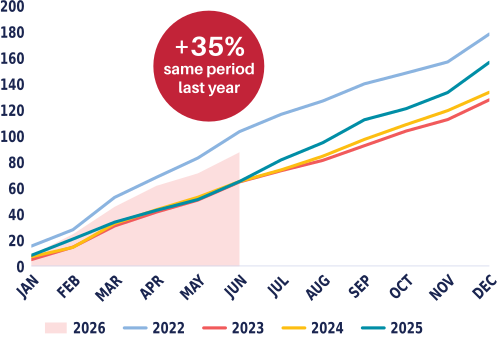
DEV APAC INCOME PRODUCING TRANSACTION VOLUMES 2022 TO JUNE 2026
Source: MSCI, as of end June 2026
HEADLINE ACTIVITY IS UP, BUT VARIES ACROSS MARKETS
Year-to-date activity in Asia Pacific suggests investors are increasingly comfortable with prevailing interest rates and are selectively building conviction as fundamentals improve. Large deals have been a major feature, with >US$500M transactions accounting for nearly 30% of activity, the highest on record since 2007. At the margin, activity is also being supported by portfolio rebalancing following strong equity returns and the deployment of significant dry powder from funds, which stood at US$94.6B at end-2025.
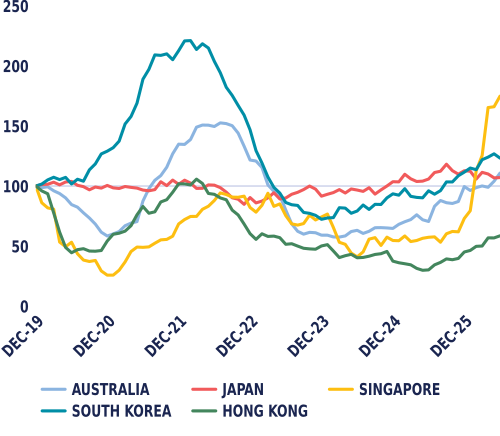
H1 2026 investment volumes reached US$87.5B, up around 35% year-on-year (y-o-y), but markets and sectors are contributing differently to the gains. Singapore remains uniquely positioned as the standout market in 2026, supported by sound fundamentals and substantially lower interest rates. Australia recorded a pick-up in Q2 led by the retail sector, while several office assets launched for sale in H2 could increase the office sector’s share by year-end. Japan saw the reverse, with activity slowing in Q2. Anecdotally, significant capital remains poised for deployment in Japan, though it is understood that some investors are turning more cautious on rate increases. South Korea remains the region’s most consistent market, underpinned by a deep domestic capital base.
12M ROLLING INVESTMENT VOLS INDEX (DEC 19=100) 2019 TO JUNE 2026
Source: MSCI, as of end June 2026
BETTER FUNDAMENTALS AT THE MARGIN
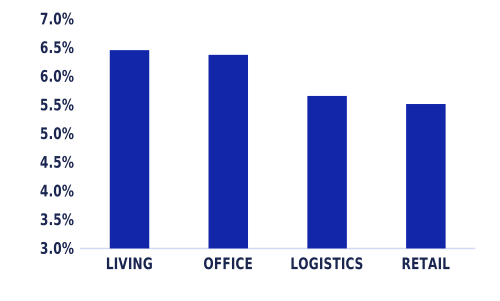
AEW Research’s unlevered total return outlook across the region is relatively unchanged from the start of the year. Outside China, limited supply should support rental growth over the forecast period. Returns are therefore expected to be driven primarily by income growth, with higher-quality assets benefiting disproportionately as occupier demand becomes more selective. However, in some markets and sectors, underwritten cap-rate compression remains important to achieving target returns.
UNLEVERED APAC TOTAL RETURN OUTLOOK P.A.
2026 TO 2030
Source: AEW Research JLL, CBRE (Japan), as of Q2 2026
Trade-Offs Across the Board
SOLID GROWTH, BUT WITH VULNERABILITIES
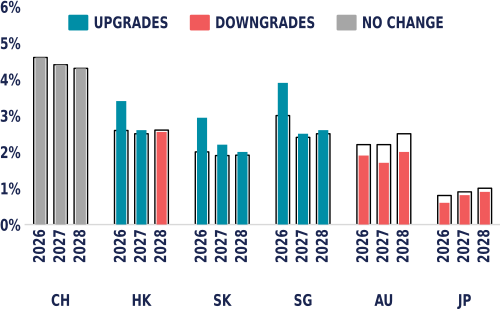
The International Monetary Fund (IMF) expects global growth to moderate slightly to 3.0% in 2026, with solid AI demand and productivity offsetting the effects of ongoing geopolitical tensions and energy price shocks. Downside risks remain with an unclear path to resolution of the Middle East conflict as well as the latest global tariff program.
For now, growth forecasts for Singapore, South Korea and Hong Kong, in fact, have been upgraded since the start of the year.
Across developed APAC, South Korea, Japan, Singapore and Hong Kong are net energy importers but also beneficiaries of AI-related technology and semiconductor demand. Australia benefits as a net energy exporter but faces persistent inflation and the impact of three rate hikes year to date. China remains a two-speed economy: rapid advances in AI, automation, robotics, semiconductors and electric vehicles have yet to outweigh the broader drag from the property correction, weak household spending and rising youth unemployment.
GROWTH FORECASTS ASIA PACIFIC 2026 TO 2028
Source: Bloomberg, as of end July 2026
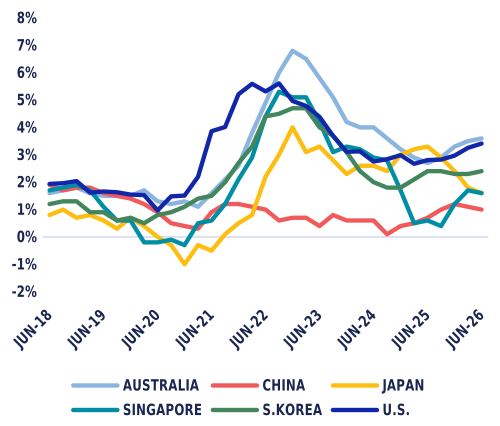
FISCAL SUPPORT COULD BRING INFLATION PRESSURE
The immediate growth pressures and energy price shocks are being managed by fiscal support in 2026, with governments issuing supplementary budgets to address oil prices, fuel shortages and weak household spending. Longer-term fiscal packages are also being announced - prioritizing technology, semiconductor capacity and other strategic industries. However, stronger public spending will add to fiscal deficits, and in some markets, inflation. Japan for example has outlined a US$2.3T public-private investment plan through 2040 across 17 strategic sectors. Australia also faces a difficult inflation-growth trade-off, as the country’s large data center investment pipeline could add further pressure on power, construction and labor costs.
CORE INFLATION 2018 TO 2026
Source: Bloomberg, as of end July 2026
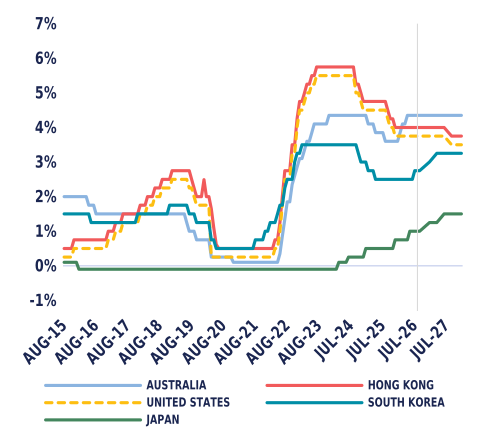
CENTRAL BANKS’ WIDESPREAD HAWKISH PIVOT
The trade-off for stronger growth and fiscal support is stickier inflation, which has pushed central banks toward a more hawkish stance. Singapore’s central bank has tightened policy (through its exchange rate) twice this year, while the Bank of Korea (BoK) raised rates after an extended pause. The Reserve Bank of Australia (RBA) has remained on hold since its last increase in May, while the Bank of Japan (BoJ) retains a tightening bias. Inflation is the primary influence on monetary policy for most markets, however currency movements might also play a part in policy decisions, for example in Japan and South Korea.
POLICY RATE HISTORICAL & OUTLOOK 2015 TO 2027
Source: Bloomberg, as of end July 2026
Diverse Opportunity Set Across the Region
LIVING & LODGING
Demand is Clear, Exit Markets Gaining Depth Slowly
Structural demand, supported by demographic tailwinds and policy reforms, continues to underpin conviction in the living sector. Regional stock is expanding through ground-up development and asset conversions, but transaction volumes for stabilized assets remain modest at just ~10% of overall activity for the last two years. Exit liquidity outside the relatively more mature markets like Japan and Australia’s student and seniors housing sector is still developing. Encouragingly, Hong Kong student housing conversions have attracted a growing pool of investors, while upcoming sales of stabilized co-living portfolios in South Korea and Singapore could establish much-needed pricing and cap-rate benchmarks. In Australia, a newly launched index covering stabilized build-to-rent assets should further improve market transparency.
INDUSTRIAL & LOGISTICS
Easing Supply Lifts the Regional Outlook, but Outcomes Will Be Shaped By Demand
Supply cycles are nearing their tail end, which is improving the rental outlook particularly in the North Asian markets where near-term rental growth forecasts have been upgraded this quarter. This marginal improvement has also boosted investment activity by 30% in H1 2026 vs. the same period last year. Demand drivers today are diversified across markets - in South Korea, e-commerce and manufacturers are driving 3PL demand for dry storage while in Japan, SMEs and start-ups priced out of the bay-area markets are looking to inland areas where rents can be 40 to 50% lower. Singapore’s expanding AI-linked electronics and semiconductor sectors contrast with weakness among chemicals and biomedical occupiers. Meanwhile, leasing demand from large-format occupiers in Australia has softened, as reflected in substantially higher incentives. With supply pressures easing but demand increasingly fragmented, market, location and asset selection remain critical.
OFFICE
Conviction in Supply Contrained Markets
Office is one of the few sectors where AI both supports near-term demand and threatens its longer-term outlook. AI occupiers are currently a dependable source of absorption, reinforcing the income case in supply-constrained markets. Investor conviction remains concentrated accordingly. Singapore Grade A rents have risen for six consecutive years, Brisbane and Sydney continue to outperform, and rental growth forecasts for Tokyo and Osaka have been substantially upgraded in the near-term amid tight vacancy and robust demand. Hong Kong is also entering recovery, with IPO-driven leasing supporting positive absorption beyond Central, although momentum remains confined to Hong Kong Island.
RETAIL
Capital Continues Leading as Consumers Show Caution
Retail investment activity has remained strong, led by Australia and Singapore, which together accounted for more than 60% of Asia Pacific retail volumes in H1 2026. In Australia, investors appear undeterred by higher rates, with the scarcity of quality assets encouraging transactions when opportunities arise. In Singapore, food and beverage demand continues to support leasing, while tourist-facing luxury has softened. In Hong Kong, rental corrections are attracting new entrants to prime districts, although the near-term outlook remains subdued.
Living & Lodging
JAPAN
Outer Wards Discount Narrowing
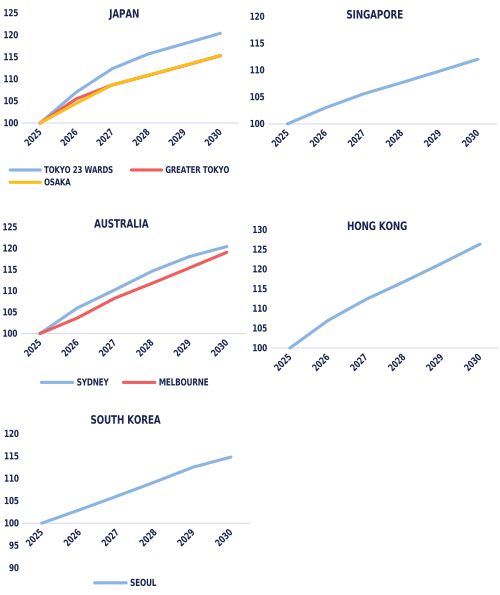
Uneven wage growth and growing affordability pressures are increasingly evident in leasing patterns, with population growth shifting toward more affordable parts of Tokyo. These trends are typical of late-cycle markets. Rents in the outer wards are expected to rise by 3% to 5% in 2026, while growth in the central five wards may slow given rents already stand around 20% above the Tokyo 23 wards average.
SINGAPORE
Vacancy Stabilizes, Co-Living Gains Policy Recognition
Demand for flexible and plug-and-play housing solutions has helped vacancy among established co-living operators stabilize at 10% to 15%. Demand could receive further support going forward from an independent living initiative launched in July 2026, through which two private operators will provide more than 100 subsidized co-living units to local residents aged 21 to 35.
AUSTRALIA
NSW Overtakes Vic In Forward Pipeline Growth
At 9,645 units, New South Wales’ (NSW) BTR pipeline now exceeds Victoria’s (VIC) 5,106 units. This reflects a more proactive policy approach, including foreign purchaser duty exemptions for large-scale BTR projects, rezoning initiatives and streamlined approval pathways, which have reduced delivery risks. Nevertheless, supply remains constrained nationally, with vacancy levels below 2% continuing to support rental growth.
HONG KONG
More Conversions Take Place
Hong Kong PBSA remains a bright spot. Conversion activity is accelerating as roughly HKD 4bn of deals closed in H1 2026, already surpassing the full-year 2025 total, bringing more beds to market this academic year and increasing leasing competition at the margins. Entry is getting harder as conversion-ready hotel supply thins out, pushing investors toward B-grade offices, which may slow future deliveries due to their additional complexity.
SOUTH KOREA
Narrower Investment Path For Co-Living?
The transition away from a predominantly Jeonse system has made stable income returns easier to underwrite, progressively attracting foreign interest in Korea’s living sector. However, lending restrictions and punitive taxes affecting certain asset types and locations have narrowed the investable universe and inadvertently undermine returns on existing investments. New capital is therefore likely to shift toward converting officetels and underutilized hotels, which are classified as commercial real estate and largely fall outside these restrictions.
LIVING RENT INDEX 2025=100
Source: AEW Research, Oxford Eco., Q2 2026
Industrial & Logistics
AUSTRALIA
Supply Moderation Beyond 2026 To Support Rent Growth
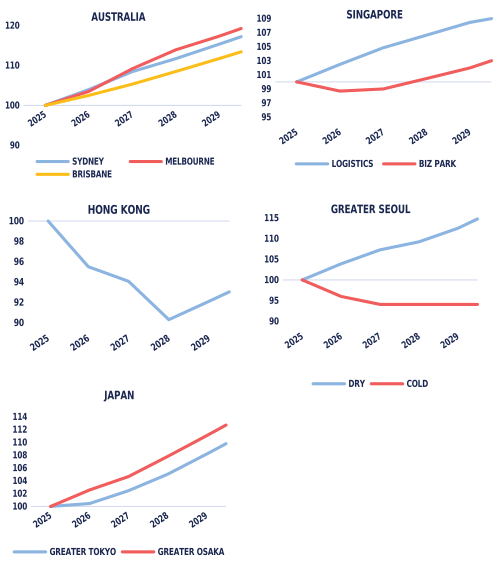
Gross take-up in Sydney and Melbourne was better than expected in Q2 2026, coming in ~30 to 40% above their 10-year averages and keeping vacancy broadly stable at between 5% and 6%. Supply is expected to peak in 2026 but should moderate through 2027 and 2028 as more projects at the planning stage get deferred, particularly in Melbourne. Overall, this should be positive for rent growth and give room for incentives to ease.
SINGAPORE
AI Resilience, Biomedical Dislocation
Headline PMI stayed resilient, with AI-driven electronics strength offsetting weakness in biomedical and chemicals. Sustained margin pressure in the latter could push some owner-occupiers toward evaluating sale-and-leaseback options. With vacancy tight at ~3%, rent growth in logistics should pick up in H2 2026. Business Parks remain more of a concern in the near-term as large vacancies in the fringe submarkets struggle to get filled.
HONG KONG
Leasing Volume Underpinned by AI Demand
Gross leasing volumes in Q2 2026 reached 1.6 million sq ft, the highest quarterly level since 2022, driven by the electronics sector and some forced relocations from the upcoming Northern Metropolis development. However, behind the headline positivity, landlords were more aggressive in lowering asking rents in exchange for occupancy, highlighting pockets of excess supply and limited pricing power. Capital values should soften alongside rents while these challenges persist.
SOUTH KOREA
Market Polarization Intensifies
Annual new supply across 2026 to 2028 now sits at the lowest levels since 2016, with vacancy rates continuing on a normalization path since peaking in 2024. Dry storage, where demand has been supported by 3PL expansion, has now seen 13 quarters of rental growth and is simultaneously gaining investor interest. Cold storage by contrast remains weak overall but has seen significant improvements in occupancy and leasing in key submarkets like Incheon.
JAPAN
Fringe Markets on the Road to Recover
A declining supply picture and expectation for better rental growth from 2027 are drawing selective investor interest to Greater Tokyo. Occupier demand is increasingly specific, with expanding SMEs, 3PLs and auto industries favoring multi-tenant assets with ramp access and floor plate sizes between 1,500 and 2,500 tsubo. As completions taper and demand moves outwards from Gaikan-do and Route 16, outcomes may end up being more asset specific.
LOGISTICS EFFECTIVE RENT INDEX 2025=100
Source: AEW Research, JLL, CBRE , Q2 2026
Office
AUSTRALIA CBD
Sydney & Brisbane Lead
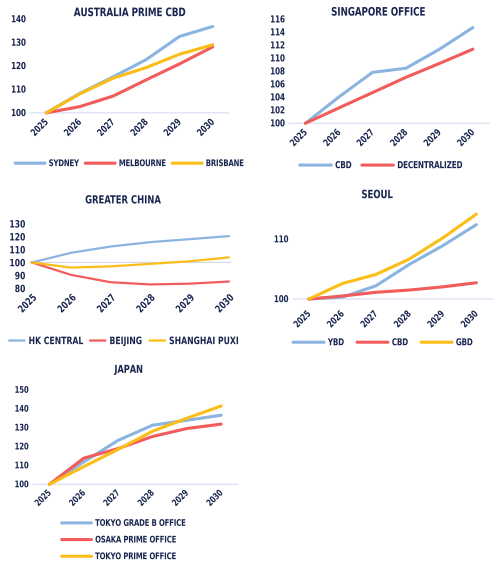
Brisbane and Sydney CBDs continue to be the strongest occupier markets nationally, while Melbourne’s excess vacancy (currently at 21%) will take time to absorb given persistent work-from-home trends and space handbacks from major public sector tenants. Investment volumes reached AUD 3.7 billion in H1, with activity generally stronger in Sydney and Brisbane, reflecting leasing-market trends. More stock is coming to market for sale this year as owners seek to capitalize on this momentum.
SINGAPORE
Solid Rent Reversions, Core Plus Capital Active
CBD Grade A office rents are in their sixth consecutive year of growth, with vacancy tightening to 5% against a limited 2026/27 supply pipeline. Strong fundamentals and low interest rates have driven a sharp increase in investment, led by core-plus capital. Several large transactions have made Singapore CBD the second-most actively traded gateway office market this year.
HONG KONG
Recovery Broadening Beyond the Core
Leasing demand on the back of a buoyant IPO market has led to another quarter of positive net absorption. The recovery is showing signs of extending beyond Central but remains limited to Hong Kong Island for now. Investment activity has improved from last year to US$2.5B in H1 2026 despite relatively tight bank lending, with more discounted transactions by end-users and educational institutions.
CHINA
Rental Weakness Persists as Tech Buyers Step In
Occupier markets are in their sixth year of rent declines, with continued heavy supply pushing vacancies to new peaks by year-end and keeping rents under pressure. Assets being sold today are generally trading at or below loan value. Among today’s active buyers are tech giants and AI companies looking to lock in long-term headquarters at attractive prices.
SOUTH KOREA
Rising Vacancy to Lead to More Selectiveness in CBD
Low vacancy and resilient financial and technology demand should keep GBD and YBD’s rent growth stable. The CBD, however, faces minimal rent growth as new deliveries have pushed the submarket to ~12% vacancy. While domestic investors remain active buyers, they could turn more selective given CBD’s oversupply.
JAPAN
Strong Office Demand, With Pricing Discipline Increasing?
Positive readings on the BoJ’s Tankan business confidence survey have historically correlated with stronger office demand. With this indicator currently positive, effective rents should continue to rise in Tokyo and Osaka. Japan continues to record strong office investment activity, supported by robust income growth. However, a narrowing yield spread may make investors increasingly price-sensitive.
OFFICE EFFECTIVE RENT INDEX 2025=100
Source: AEW Research, JLL, CBRE, Q2 2026
Retail
AUSTRALIA
Differentiated Performance
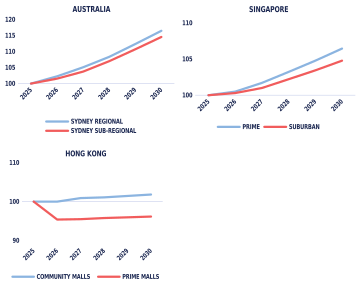
Australia’s retail market is showing broad-based resilience, with recovering consumer spending, rental growth across all formats and strong investment activity. However, performance is increasingly differentiated. Prime CBD and large-format retail are leading rental growth, while regional and sub-regional centers are attracting the strongest investor demand. Neighborhood centers, previously the defensive favorite, are showing less pricing momentum, with yields softening slightly over the quarter, indicating that pricing has become full.
SINGAPORE
Modest Occupier Fundamentals, Strong Investor Demand
The demand picture is mixed – net new store openings driven by the F&B sector supports suburban locations while slower tourist arrival growth has affected the mid-market and luxury retail segment, primarily in Orchard Rd. Still, the occupier market is supported by limited new supply which should ensure annual low single-digit rent growth for the forecast period. Transaction activity remained resilient, underpinned by a diverse buyer base of institutional investors and high-net-worth individuals.
HONG KONG
Soft Rents Attract New Brands
Hong Kong’s retail leasing recovery gained momentum in Q2 as rebased rents, rising visitor arrivals (up 13% y-o-y) and improving sentiment attracted occupiers back to core districts. Demand remains concentrated in F&B, lifestyle concepts and mainland Chinese brands, helping reduce high-street vacancy in areas like Causeway Bay and Tsim Sha Tsui. Rents, however, remain about 30 to 40% below 2019 levels.
RETAIL RENT INDEX 2025=100
Source: JLL, AEW Research, Q2 2026
For more information, please contact:
HANNA SAFDAR
Head of Research and Strategy, Asia Pacific
hanna.safdar@aew.com
+65.6303.9014
JAY STRUZZIERY, CFA®
Head of Investor Relations
jay.struzziery@aew.com
+1.617.261.9326
This material is intended for information purposes only and does not constitute investment advice or a recommendation. The information and opinions contained in the material have been compiled or arrived at based upon information obtained from sources believed to be reliable, but we do not guarantee its accuracy, completeness or fairness. Opinions expressed reflect prevailing market conditions and are subject to change. Neither this material, nor any of its contents, may be used for any purpose without the consent and knowledge of AEW. There is no assurance that any prediction, projection or forecast will be realized.